

Source: Veritasium
Thank you for reading this post, don't forget to subscribe!Enigma code cracked: What You Need to Know
THE TL;DW
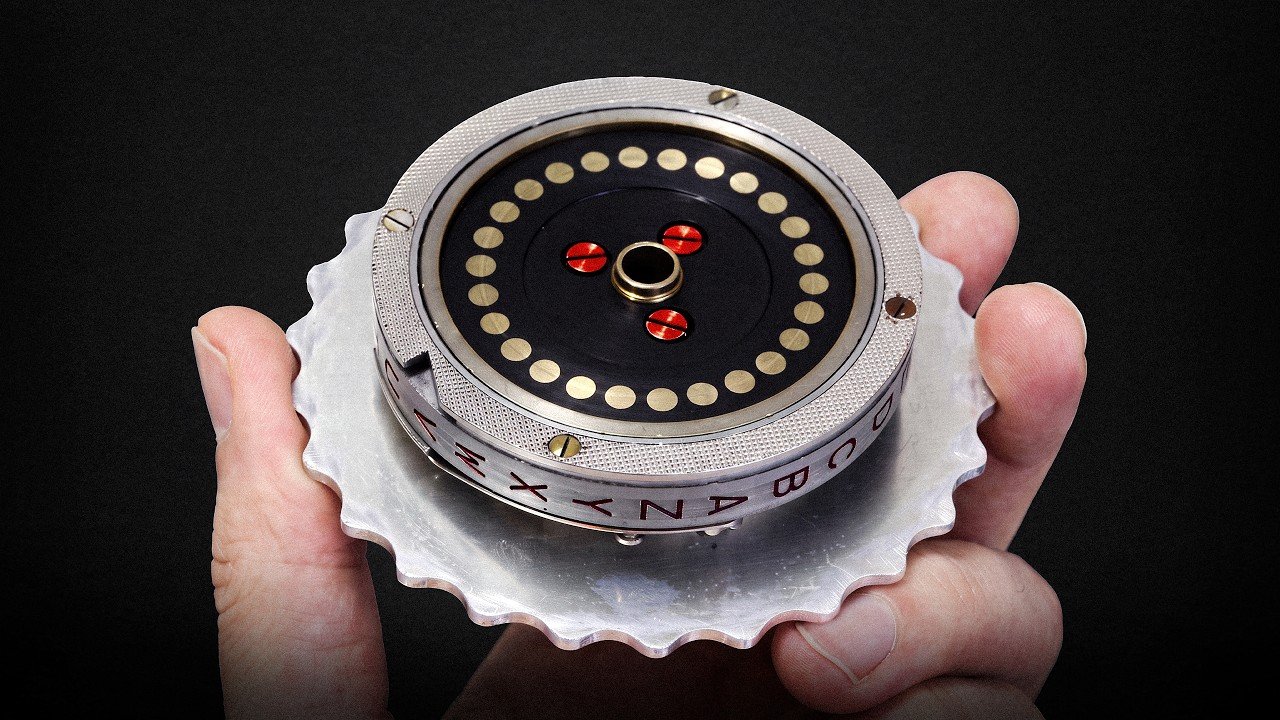
- Veritasium visits Bletchley Park and The National Museum of Computing to explain exactly how the German Enigma machine encrypted messages and why it was considered unbreakable.
- The video walks through how the Enigma code cracked story actually began with Polish mathematicians in the 1930s before British codebreakers, including Alan Turing, built on their work.
- It details how Turing exploited structural flaws in Enigma — like a letter never encrypting to itself — and how his Bombe machine mechanized the search for daily settings.
The Jupiter Take
This is Veritasium’s deep-dive into one of history’s most consequential codebreaking efforts, filmed on location with historians and archivists at the actual sites where it happened. The video matters because it grounds a familiar WWII story in hands-on demonstrations of the machines themselves, rather than just retelling the legend.
Context
The Enigma machine was a commercial cipher device adopted by the German military in the 1920s, and its use of rotors and a plugboard created an astronomical number of possible settings — hundreds of quintillions by some estimates. What made it seem unbreakable was less the math and more the assumption that no adversary could ever build a machine fast enough to test all those combinations by hand. That assumption cracked first in Poland, where mathematicians including Marian Rejewski broke early versions of Enigma in the 1930s and built a precursor device before sharing their techniques with Britain and France just before the war.
At Bletchley Park, Alan Turing and Gordon Welchman took that foundation and engineered the Bombe, an electromechanical machine that exploited a key design flaw: Enigma could never encrypt a letter to itself, which let codebreakers rule out impossible settings using “cribs,” or guessed snippets of plaintext like routine weather reports. The resulting intelligence, codenamed Ultra, is widely credited with shortening the war and saving lives, though historians debate the exact scale of that impact. Veritasium’s use of the actual museum, artifacts, and expert historians to reconstruct the process — rather than just narrating the well-known Turing biopic version of events — is what distinguishes this video from the many other retellings of the story, similar in spirit to how The National Museum of Computing preserves and explains the original Bombe reconstruction.