




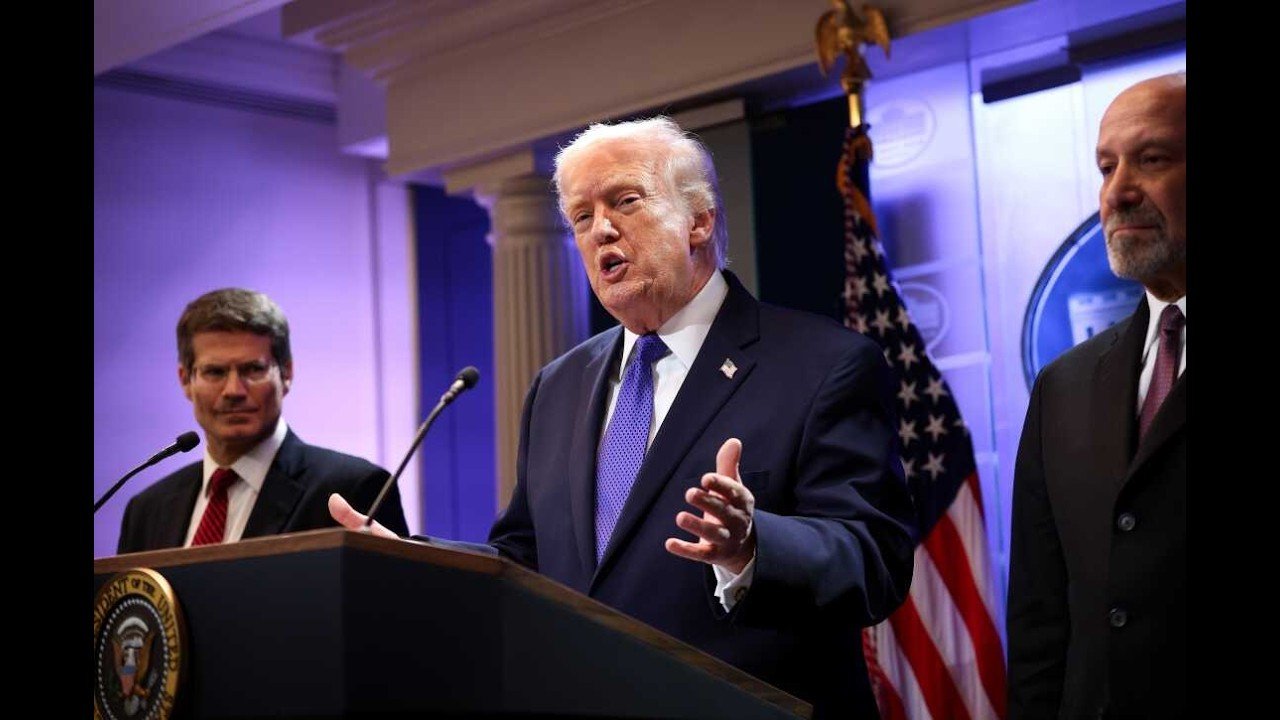
The Trump administration asked the Supreme Court on Friday to immediately clear the way for construction to resume on President Donald Trump’s controversial White House ballroom, escalating a months-long legal battle to the nation’s highest court. The emergency filing came one week after a federal appeals court ruled that Congress never authorized the $400 million project, and it set up what could be the first major test of Trump’s building ambitions before the justices.
Thank you for reading this post, don't forget to subscribe!The White House ballroom Supreme Court fight has become a flashpoint for arguments over presidential authority, with the administration insisting the project is a matter of urgent national security while preservationists and lower courts have said Trump overstepped his power by demolishing the East Wing without congressional sign-off.
How the Legal Fight Reached the Supreme Court
The case traces back to last fall, when Trump ordered the demolition of the White House’s East Wing to make way for a planned 90,000-square-foot ballroom. A federal district judge later ordered a stop to aboveground construction after the National Trust for Historic Preservation sued, arguing the project required approval from Congress.
On August 7, the U.S. Court of Appeals for the District of Columbia Circuit upheld that injunction in a 2-1 ruling. According to CNN,
the appeals court said the president lacked any authority to unilaterally pursue the planned ballroom and ordered him to stop work at the site of the former East Wing until lawmakers gave their blessing
. The panel did allow underground construction, including a bunker beneath the ballroom, to continue.
The appeals court gave the administration two weeks to appeal before its ruling would take effect, setting an August 21 deadline. In response, Solicitor General D. John Sauer filed the emergency application asking the Supreme Court to intervene before that clock runs out, and indicated the government will separately ask the justices to take up the full case on the merits, according to ABC News.
The Administration’s National Security Argument
In the filing, Sauer leaned heavily on security concerns, pointing to recent threats against Trump. As CBS News reported,
Sauer wrote that the renovations are “absolutely required and should not be enjoined” because any delay threatens President Trump’s safety after recent domestic and international assassination plots against him
. The filing reportedly detailed a threat that led Trump to secretly board an alternate aircraft last month, according to The Hill.
Trump has increasingly argued that building the ballroom is a matter of national security and military readiness because it will include what he describes as a “drone port” on its roof
, CNBC reported. Sauer also disclosed new details about the construction’s progress, telling the court
the project is “65% complete in its entirety, and moving quickly toward total completion,” with a concrete-and-steel superstructure that stretches five stories deep and 70 feet high, occupying nearly 50,000 square feet
.
The solicitor general argued the president has broad authority over the residence, writing that
“the President of the United States of America is not a tenant, but rather the sole, elected head of the Executive Branch, and Congress has authorized him to renovate, secure, and protect the White House and its grounds, as other Presidents have been allowed to do, without exception.”
The administration also contends the National Trust lacks standing to sue and that federal law has long permitted presidents to alter the executive residence.
Preservationists Push Back
The National Trust for Historic Preservation, which brought the original lawsuit, has urged the Supreme Court to let the injunction stand while the appeal plays out, per CNBC. In earlier filings, the group accused the administration of trying to
“outrun the courts” by accelerating construction work, pointing to plans to install 1 million pounds of rebar and pour another 3,000 cubic yards of concrete in the next week alone
, warning that the government’s tactics “must stop here.”
The dispute has drawn attention to just how far Trump’s team believes his authority extends. During earlier appeals court arguments, a Justice Department lawyer suggested in response to a hypothetical that
the government could bulldoze the Statue of Liberty and the White House
under its reading of executive power — a comment that became a flashpoint in commentary on the case.
Why the Case Matters
As Brian Tyler Cohen framed it on his channel’s “Another Day” segment, the spectacle of the White House asking the Supreme Court to intervene on a ballroom renovation underscores how unusual — and consequential — the underlying legal question has become: whether a president can unilaterally demolish and rebuild federal property without Congress’s consent. That framing is commentary rather than a legal analysis, but the underlying stakes are real. CNN noted that
the request is the first time any of Trump’s pet projects has landed before the Supreme Court, after lower courts sifting through challenges to his plans to remake Washington have looked skeptically at his arguments
.
The Supreme Court is expected to seek a response from the National Trust before ruling on the stay request, according to ABC News. With the appeals court’s injunction set to take effect on August 21 unless the justices act, the case has reinvigorated the court’s emergency docket in the middle of its summer recess — placing the fate of Trump’s ballroom, and a broader question about the limits of presidential power, squarely in the hands of the nation’s highest court.