




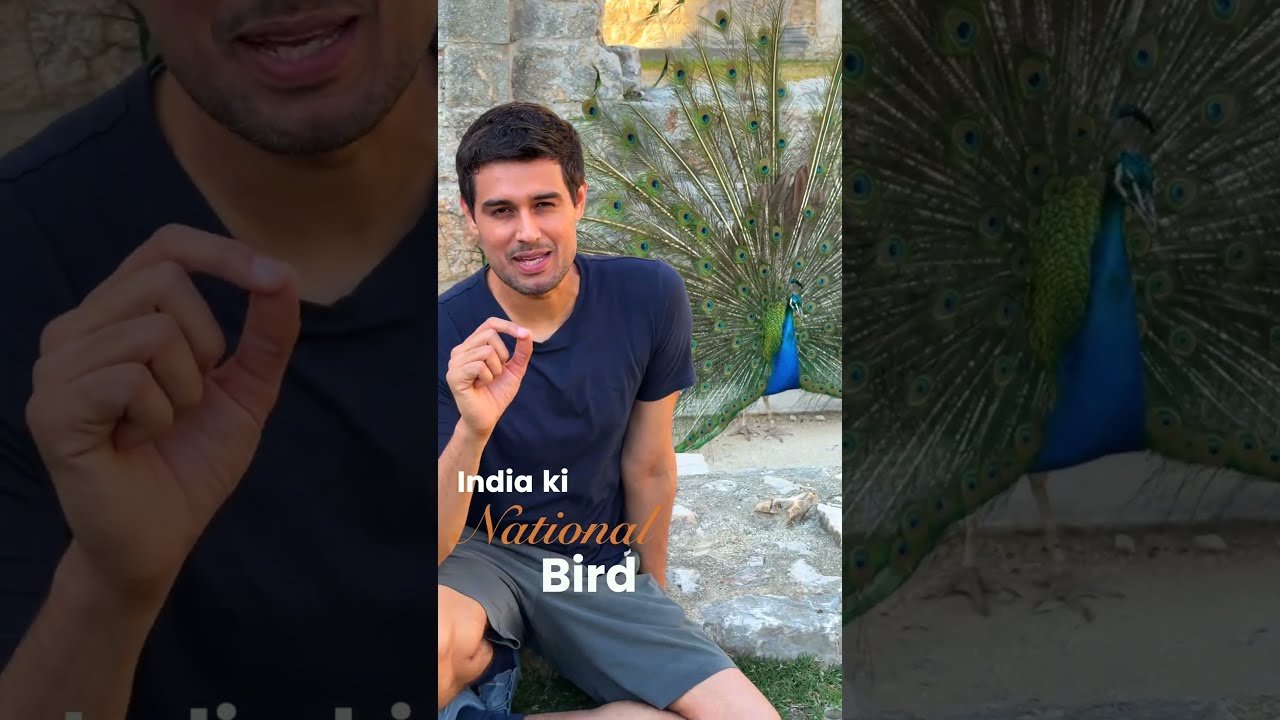
As India marked its 79th Independence Day on August 15, popular YouTuber Dhruv Rathee published a short vlog titled “Unbelievable Facts about India’s National Bird!” on his Dhruv Rathee Vlogs channel, prompting renewed interest in the peacock’s official status and the history behind its selection. The video, posted alongside Rathee’s Independence Day content, is a lighthearted, educational look at the bird rather than a hard-news report, but the underlying facts about the peacock’s designation are well documented and worth revisiting.
Thank you for reading this post, don't forget to subscribe!How the Peacock Became India’s National Bird
The Indian peafowl, scientifically known as Pavo cristatus, was formally declared India’s national bird in 1963. According to multiple accounts of the decision, the choice was made by a government committee that weighed several candidate species before settling on the peacock, requiring that the selected bird be widely distributed throughout India, uniquely recognisable, culturally meaningful, and representative of ‘India’.
The bird’s deep roots in Indian religious and cultural life were central to that decision. In Hindu tradition, peacocks are closely associated with Lord Krishna, who is often depicted with a peacock feather in his crown, as well as with deities such as Kartikeya, who is shown riding the bird. Beyond mythology, the species is found across nearly every Indian state, from the forests of the Western Ghats to the arid plains of Rajasthan, making it a genuinely national symbol rather than a regional one.
Legal Protections and Conservation Status
Despite its ceremonial status, India’s national bird faces real-world pressures. The Indian peafowl is protected under the country’s Wildlife (Protection) Act of 1972, which makes hunting, capturing or killing the species a punishable offense. Conservation researchers note that the peafowl is listed under Schedule I of that law, reflecting its high conservation value, even though global population estimates remain informal.
Internationally, the IUCN Red List classifies the Indian peafowl as a species of “Least Concern,” indicating that its overall population is stable and widespread. That designation, however, can mask localized problems. Conservation groups tracking the species have flagged that poaching for feathers and meat, along with accidental poisoning from pesticide-treated seeds, continues to threaten regional populations even as the bird’s overall numbers remain healthy nationally.
The law does carve out one notable exception: the collection and trade of peacock feathers that have been naturally shed is permitted, since peafowl molt their long train feathers annually outside the breeding season. Wildlife officials and conservationists have developed methods to distinguish shed feathers from those illegally plucked from captured or killed birds, precisely because that exemption has at times been exploited by poachers.
A Bird Woven Into Everyday Life
Part of what makes the peacock distinct among national symbols is its sheer visibility. Unlike India’s national animal, the Royal Bengal tiger, which was adopted a decade later in 1973 and lives largely in protected reserves, the peacock is a common sight in villages, farmland and even city parks across the subcontinent. Its dramatic courtship display, in which the male fans out an iridescent blue-and-green train covered in eye-like markings, has made it one of the most recognizable birds in the world and a recurring motif in Indian art, architecture and literature for centuries.
That ubiquity is also a source of friction: peafowl are known to raid crops in agricultural areas, occasionally putting farmers at odds with a species they cannot legally harm. Conservation groups working in states such as Tamil Nadu have run community programs, including local “Peacock Protection” initiatives, to reduce poaching while helping farmers manage the birds’ impact on fields.
Rathee’s video, framed around Independence Day, uses the peacock’s story as a way to connect national pride with a piece of everyday natural heritage that many Indians encounter but may not know the official history behind. As with much of his channel’s content, the video is presented as popular explainer material rather than investigative journalism, drawing on widely available historical and biological facts about the species rather than breaking new information.