


Source: Veritasium
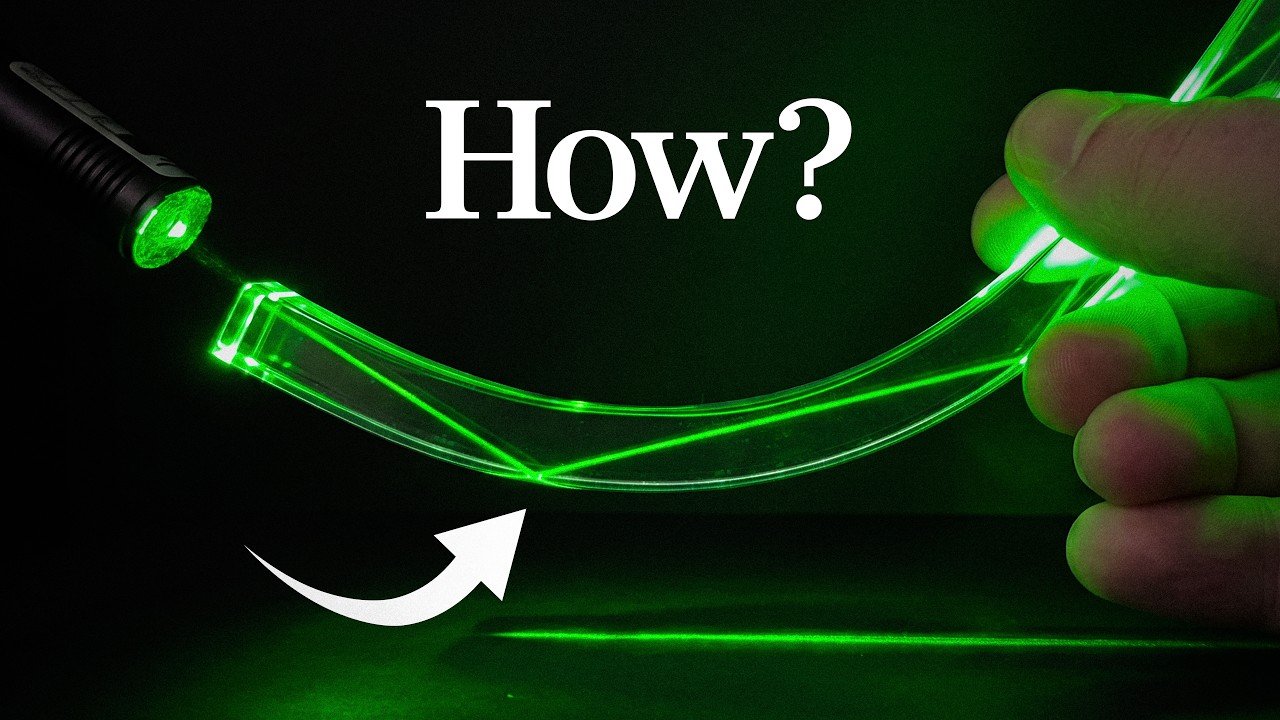
trapped light fiber optics: What You Need to Know
THE TL;DW
- Copper phone lines hit a hard capacity ceiling, pushing engineers to search for a faster way to move signals long-distance.
- The video explains how trapped light fiber optics only became viable once scientists figured out how to strip nearly all impurities from glass, since ordinary glass absorbs and scatters too much light to carry a signal far.
- It credits the researchers and glassmakers (including Dr. Donald Keck) who cracked ultra-pure fiber manufacturing, the breakthrough that made modern high-speed internet possible.
The Jupiter Take
This is a history-of-tech deep dive rather than breaking news, tracing one of the quieter inventions that quietly underpins nearly everything online today. Veritasium frames trapped light fiber optics as a decades-long engineering puzzle, not an overnight discovery, and leans on original interviews with the scientists who solved it.
Context
Fiber optics traces back to 1960s research questioning whether glass could ever be purified enough to carry light signals over useful distances without the light scattering or being absorbed into heat. Corning Glass Works researchers, including Donald Keck alongside Robert Maurer and Peter Schultz, are widely credited with the 1970 breakthrough that produced the first low-loss optical fiber, clearing the technical bar needed for practical long-distance communication. The video also brings in voices like Sir David Payne, a pioneer of fiber amplifier technology, and Prof. Vincent Chan, tying the glass-manufacturing story to the broader systems engineering that let fiber scale into a global network.