



Source: Kurzgesagt – In a Nutshell
humanity’s first civilization: What You Need to Know
THE TL;DW
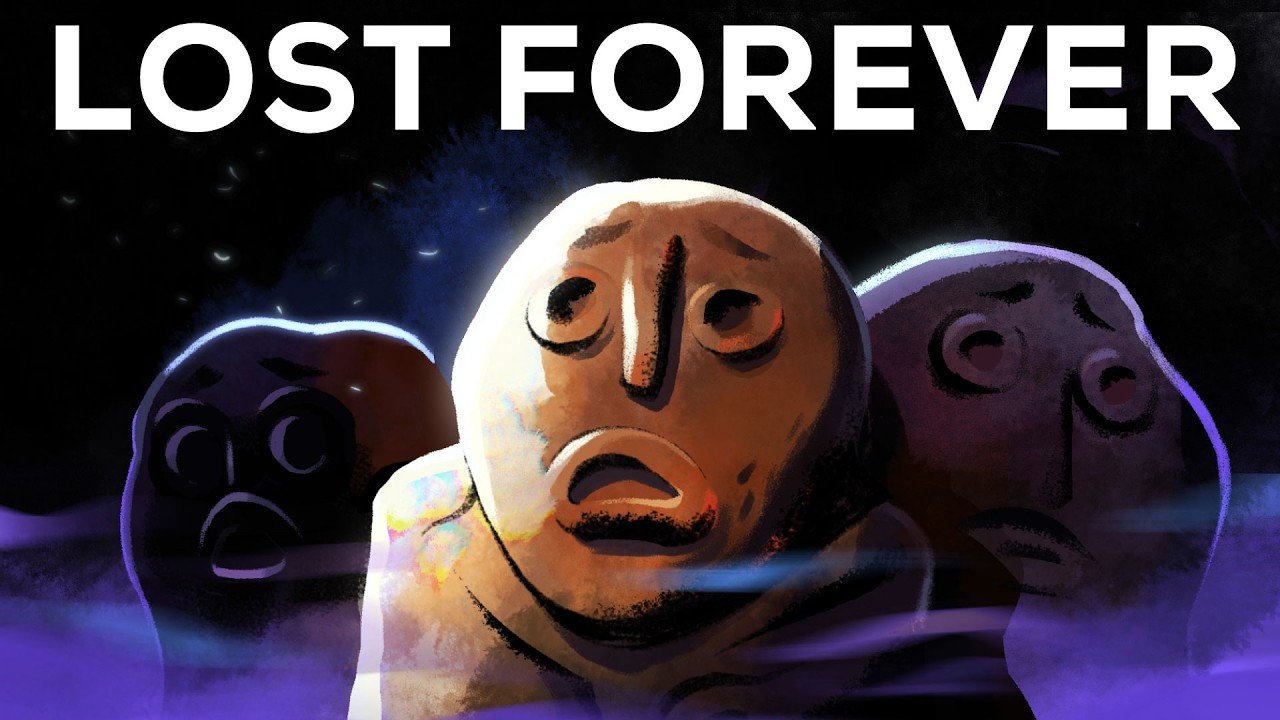
- Kurzgesagt argues most of human history is “dark matter” — the 12,000 years between the Ice Age’s end and writing’s invention left almost no written record, yet shaped everything that followed.
- The video opens with Karahan Tepe, a roughly 12,000-year-old settlement in what’s now southeastern Turkey, pointing to organized communal life and ritual building before farming even existed.
- It tracks how growing food surpluses around 10,000–8,500 years ago let populations swell to 5–10 million, spawning specialized labor, trade networks, and early artisans — using new DNA sequencing, dating methods, and lidar archaeology to reconstruct it all.
The Jupiter Take
This video reframes the story of humanity’s first civilization as a mostly invisible epic predating writing by thousands of years, not a straightforward march from caves to cities. It matters because it leans on genuinely new science — ancient DNA, lidar mapping, and improved dating — that’s actively rewriting textbook timelines about when and why humans settled down.
Context
The video’s centerpiece, Karahan Tepe, isn’t some obscure footnote — it’s part of Turkey’s Taş Tepeler (“Stone Hills”) cluster of sites near the famous Göbekli Tepe, and archaeologists there have been overturning old assumptions for years. A 2021 excavation led by Istanbul University’s Necmi Karul found that sacred and secular spaces were built simultaneously at Karahan Tepe despite no remnants of farmed vegetation, suggesting organized communal life came before, not after, agriculture — directly challenging the old “farming caused settling down” narrative taught in schoolbooks.
Kurzgesagt frames this as a broader push to use modern forensic tools — ancient DNA sequencing, refined radiocarbon dating, and lidar-based aerial archaeology — to fill in a 12,000-year gap the channel calls the “dark matter” of human history, the stretch between the end of the last Ice Age and the invention of writing roughly 5,000 years ago. It’s a fitting follow-up for a channel that regularly tackles big-picture questions about civilization’s scale and trajectory, including its earlier look at the Barrow Scale of advanced civilizations. The video also ties into Kurzgesagt’s ongoing 12,027 Human Era calendar project, which proposes counting years from the start of the Holocene epoch rather than from recorded history’s conventional start point.